Payroll
PAYE setup, RTI filing, pension auto-enrolment, wage calculations, and avoiding HMRC payroll fines.
Payroll
Sage Payroll Review 2026: Pricing, Features, Pros, Cons, and Is It Worth It?
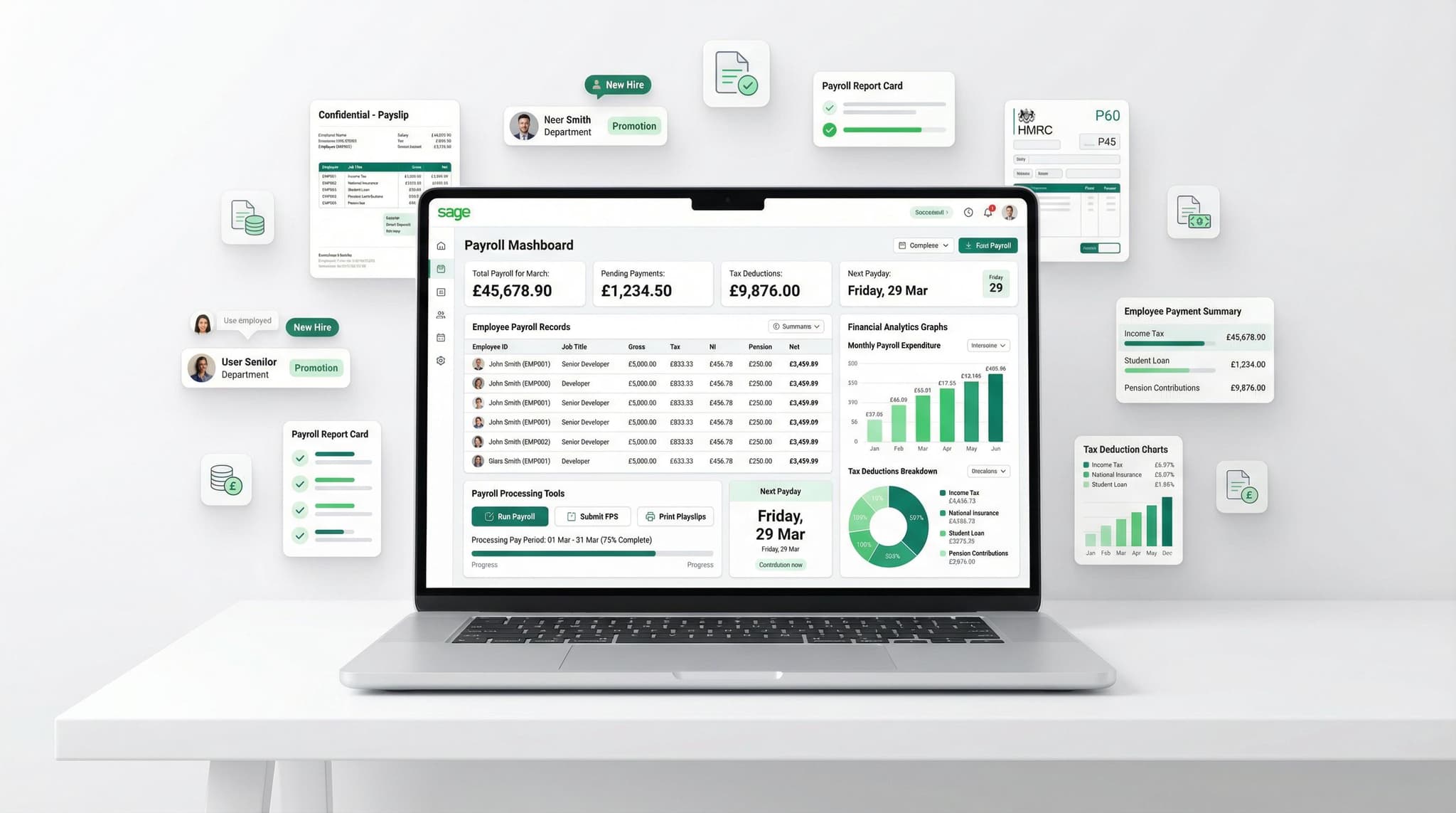
Sage Payroll is a cloud-based, HMRC-recognised payroll platform with three UK plans: Essentials at £10/mo, Standard at £20/mo, and Premium at £30/mo, each including five employees with additional staff charged at £2, £4, or £6 per employee per month. Core features across all plans include automatic gross-to-net calculations, PAYE and NI deductions, RTI submissions to HMRC, statutory pay processing, digital payslips, P60s, and automatic tax code updates. Standard adds pension auto-enrolment with NEST, NOW, People's Pension, and Smart Pension integration, while Premium adds HR, timesheets, document management, and employee self-service. The platform integrates directly with Sage Accounting so payroll journals post automatically to your books without manual re-entry. CIS returns for construction businesses are handled within the payroll workflow. The main drawbacks are per-employee costs at scale, an Essentials plan that lacks pension management, and limited integrations outside the Sage ecosystem. For UK small businesses with 1–100 employees already using or planning to use Sage Accounting, it is one of the most complete and cost-effective payroll solutions in 2026.
Abdul Rehman · 6 Mar 202611 min read
Payroll
The 8 Most Common Payroll Errors UK Employers Make (And How to Fix Each One)
The most common payroll mistakes UK employers make are wrong tax codes, incorrect gross pay inputs, NI category errors, missed RTI submissions, pension auto-enrolment mistakes, statutory pay miscalculations, poor handling of starters and leavers, and overuse of manual adjustments. Most of these errors start with weak setup and rushed manual processes rather than complex payroll law. A safer payroll process depends on accurate employee records, a fixed pre-payroll checklist, timely reporting to HMRC, and software that automates calculations and validations.
Editorial Team · 4 Mar 202613 min read

Payroll
How to Run Payroll for the First Time in the UK: A Complete Beginner's Guide
Running payroll for the first time in the UK follows six steps: register as an employer with HMRC (allow up to 30 days), choose payroll software, collect employee information including P45 or starter checklist, run your first pay run with the correct PAYE, NI, and pension deductions, submit a Full Payment Submission to HMRC on or before payday, and set up a workplace pension within six weeks of your duties start date. The standard tax code for 2026/27 is 1257L giving a £12,570 personal allowance. Employer NI is 15% above the £96.15/week secondary threshold, and the Employment Allowance offsets up to £10,500 of this cost. Pension auto-enrolment requires a minimum 3% employer and 5% employee contribution on qualifying earnings, with the earnings trigger unchanged at £10,000 for 2026/27. The National Living Wage rises to £12.71/hour from April 2026.
Editorial Team · 3 Mar 202613 min read
Payroll
How to Fix a Wrong Tax Code on an Employee's Payslip Before HMRC Notices
A wrong tax code usually comes from one of four issues: incorrect new-starter setup, wrong payroll data entry, an HMRC coding notice not being applied, or an employer trying to override the official process without the right source documents. For 2026/27, the standard PAYE code is 1257L with a £12,570 personal allowance, and HMRC's emergency code is also 1257L, typically shown as W1, M1, or X when used on a non-cumulative basis. If an employee thinks their code is wrong, HMRC says it will tell both the employee and employer within 15 working days after an update, and the revised code should then appear on the next or following payslip depending on pay frequency. The safest employer process is to check the payslip, verify the P45 or starter checklist, review HMRC notices, and only then update the payroll record.
Abdul Rehman · 3 Feb 202612 min read