Getting Paid
How to invoice properly, collect faster, and fix the mistakes that keep your money stuck with clients.
Accounting
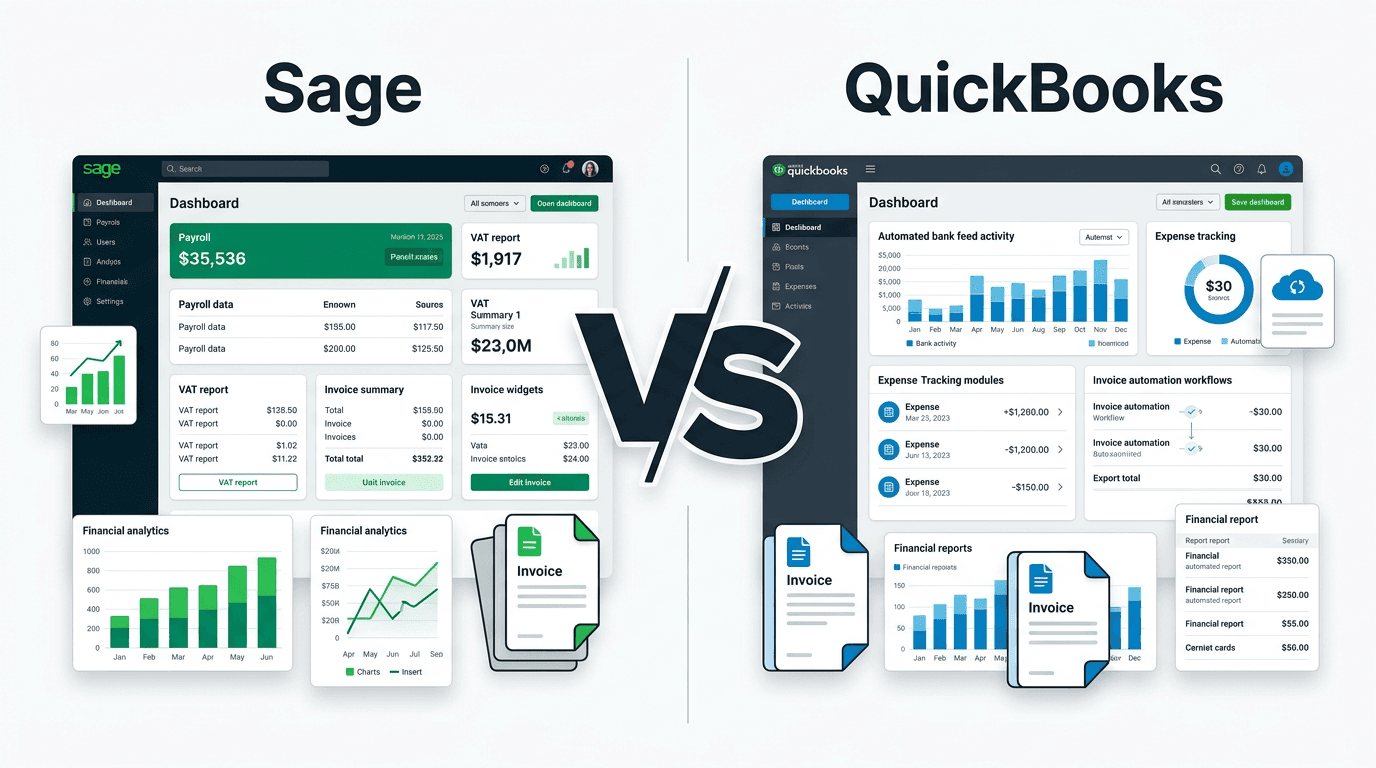
Sage vs QuickBooks: Which One Actually Saves You Money in 2026?
Sage and QuickBooks both handle invoicing, VAT, and bank reconciliation, but they differ sharply on payroll, pricing structure, and long-term costs. QuickBooks is cheaper at entry level — £10/mo vs Sage's £18/mo — and offers multi-currency from £33 vs Sage's £59. But Sage pulls ahead on integrated payroll, CIS at a lower tier (£39 vs £47), Sage Copilot AI, UK-native phone support, and pricing stability. QuickBooks has raised prices 12–17% annually since 2023, while Sage has stayed more predictable. A 10-employee business on QuickBooks pays roughly £75/mo (accounting + payroll add-on), while Sage achieves the same for less with tighter integration. QuickBooks wins on budget entry, 750+ integrations, inventory features, and weekend support hours. Choose Sage for payroll depth and compliance. Choose QuickBooks for the cheapest starting price and the broadest app ecosystem.
Editorial Team · 15 Mar 202613 min read
Getting Paid
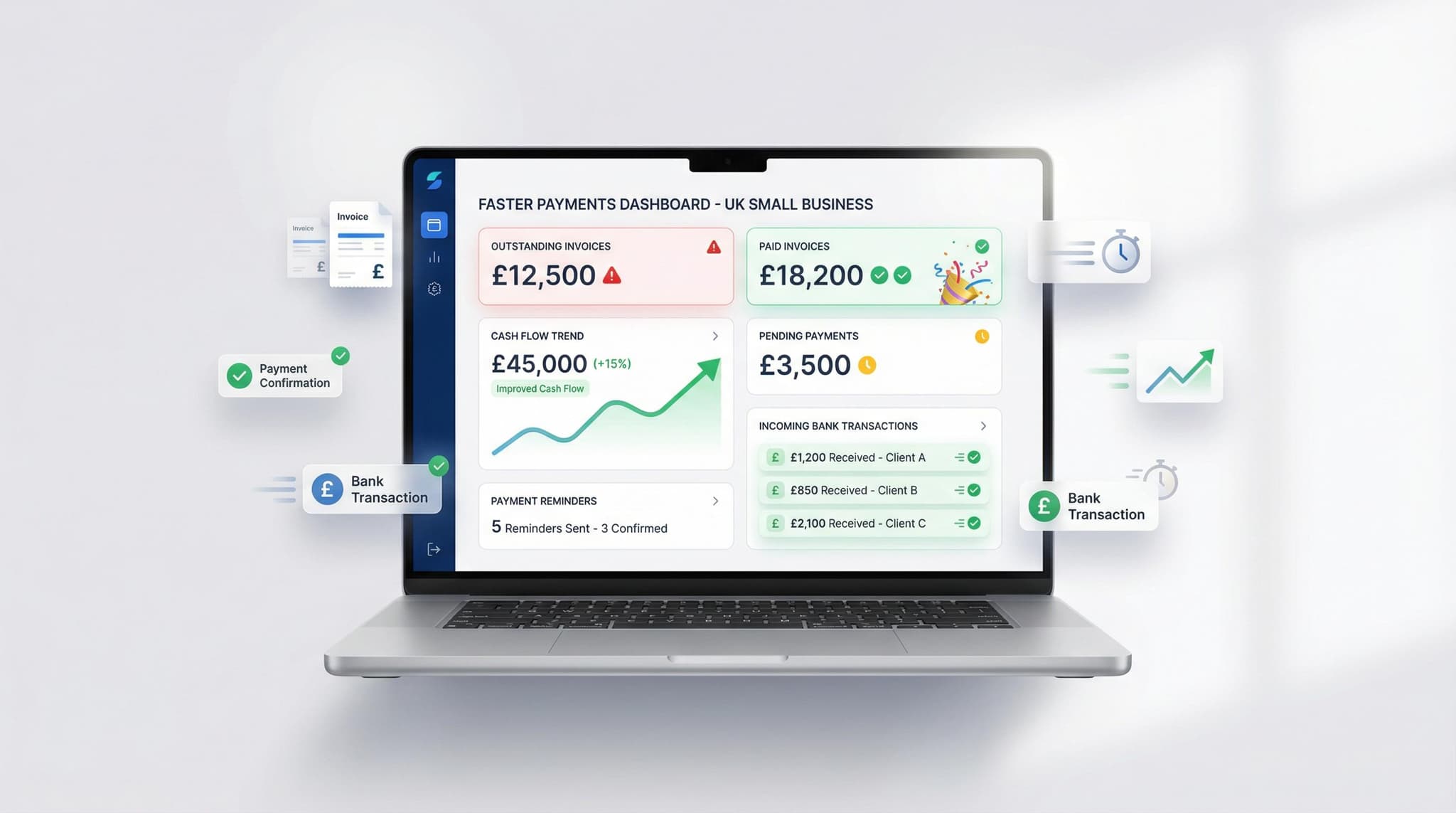
How to Get Paid Faster as a UK Small Business: 10 Proven Strategies
Nearly two-thirds of UK SME invoices are paid late. These 10 strategies — from shorter terms and Pay Now buttons to automated chasing and statutory interest — help you get paid days or weeks faster.
Editorial Team · 28 Feb 202611 min read
Getting Paid
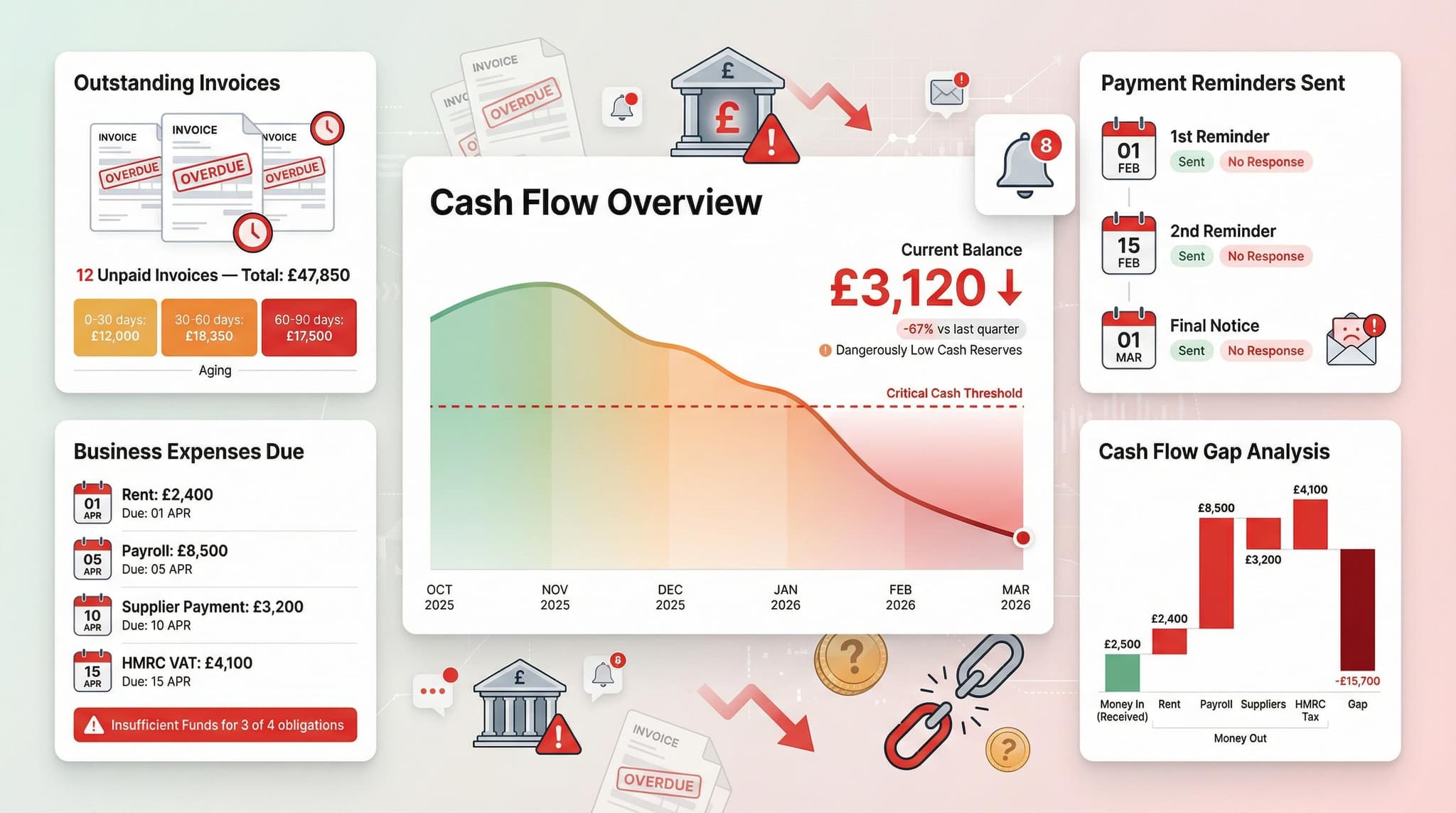
Late Invoice Payments Are Killing UK Small Businesses — Here's What You Can Do About It
UK businesses are owed £70.4bn in late payments. 42% of SMEs can't pay staff on time. Learn your legal rights, the new 2026 crackdown laws, and 10 steps to protect your cash flow now.
Editorial Team · 27 Feb 202612 min read
Getting Paid
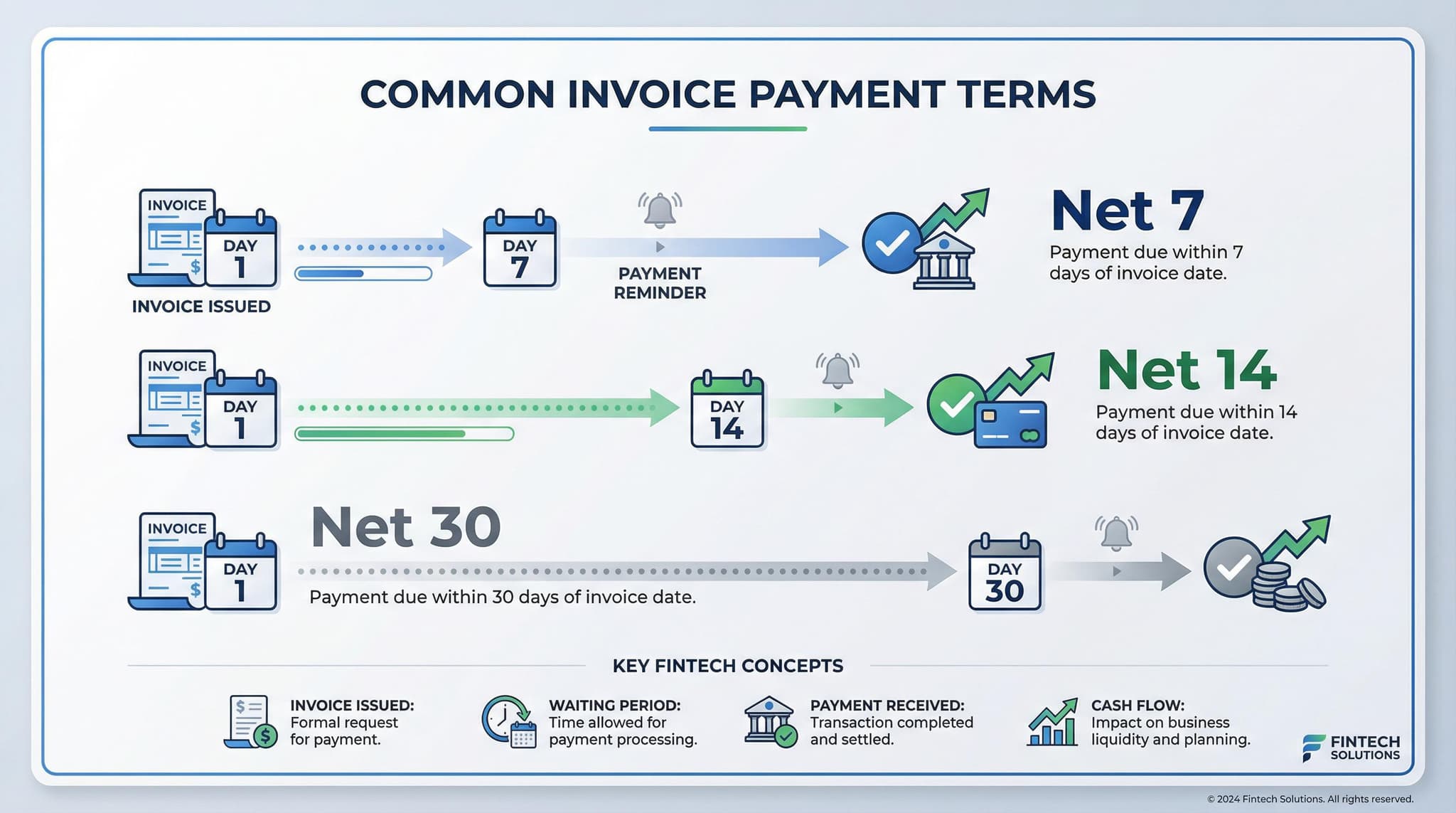
Payment Terms Explained: Net 7, Net 14, Net 30 — Which Should Your Business Use?
Net 30 is the UK default, but it might be costing you thousands. Learn what Net 7, Net 14, Net 30, and Net 60 mean, when to use each one, and how the 2026 UK late payment reforms change everything.
Editorial Team · 26 Feb 202612 min read